Showing posts with label Cultus. Show all posts

Monday, April 30, 2012

Z is for ZOOMORPHIC ANGELS II


Well, here we are at the end of April 2012's A-Z blogging challenge.  Last year's final post, Z is for Zoomorphic Angels, is my second most popular post of all time, so, I'm revisiting the subject this year.  If you missed it, I recommend going back and reading that one first (linked above) and then coming back for this year's.

Unlike the anthropomorphic ("human-shaped") angels that dominate the occasions of hierophanies or angelic visitations to humans in the Old Testament/Hebrew Bible, there are two species or classes of angels that are definitely zoomorphic.  These monstrous angels are the cherubim and seraphim (note the plural forms in Hebrew end in -im).  While we do not have Hebrew images of these creatures, we know do have the Phoenician images that were made for Egyptian and Assyrian markets, and the images made with a visual imagination dominated by Egyptian and Assyrian conceptions seem to have been the same images that were sold in Israel by Phoenicians. 

The cherubim get a lot more references than the seraphim, which I believe are only clearly and explicitly referenced in Isaiah.  The image at the bottom of the page, found in nearby Syria, has the requisite six wings and holds a serpent in each hand (check biblical references below).  In addition to the images in the archaeological record and the rather idiosyncratic descriptions in Ezekiel,  we can tell that the cherub is like a winged bull, sphinx, or griffin because YHWH is pictured as using one as a mount in the book of Psalms.  Celestial creatures of this type were popular in Mesopotamia and called karibu/kuribu, "intercessor."  King Hiram of Byblos had cherubim flanking his throne and incense altars have been found in Taanach and Meggido flanked by them.  It is not surprising them that they are said to have flanked God's throne and the Ark of the Covenant.  The parallelism of Psalm 18 may suggest that they were associated with the winds.  It is clear that both cherubim and seraphim were "angels of the presence," but they do not seem to have the messenger function of anthropomorphic angels.  I can't help but feel that the Bible does not make full use of the potential of these monstrous angels.  Why don't we ever seem them tearing into the enemies of God's people?  Maybe the God of Israel really does not have as bloody tastes as others of us do.  Certainly, in mythopoesis that was inspired by scripture, that's how I see myself using zoomorphic angels.  Maybe their occurrences in liturgical and mystical contexts instead of smiting contexts should be telling us something that I have yet to pick up on.


Scripture References
Genesis 3:24
Exodus 25:18-20; 37:6-9
Numbers 7:89
I Samuel 4:4
II Samuel 22:11
I Kings 6:23-28; 8:6-7
Psalms 18:10; 80:1
Isaiah 6:2-6; 30:6 (cf. Num. 21:6-8; Deut. 8:15)
Ezekiel 1:4-28; 10:3-22; 28:14,16

Syrian Figure from Tell Halaf

Thursday, April 19, 2012

Q is for QUEEN MOTHER OF THE WEST

Hsi Wang-mu or Xi Wangmu is a Chinese goddess of death, immortality, and the Western Paradise.  She is described in the HarperCollins Dictionary of Religion as having a leopard tail, tiger teeth, a spool-like headdress, sitting on K'un-lun mountain by a sacred tree preparing the elixir of immortality and being accompanied  by the jade hare, the three-legged bird, the toad, the nine-tailed fox, and in some accounts, an armed guard.  She hosts feasts at which seekers are served the peaches of immortality. 

I'm having trouble finding images that fit that description, but check out the following for some other ideas.  Check out this site for not only other illustrations, but the most information I found about her online.  I do not have enough expertise in Chinese religion to judge that online article by Max Dashu, but it is fascinating and packed with details and suggested interpretations of the evidence regarding this goddess.  Yumiyu's illustration is here.  Izabeth's is here.  A more modern looking illustration that looks like it may go with a video game is here.

A number of goddesses have caught my attention during this year's challenge. This one seems to combine a number of elements of Chinese religion, including the alchemical and perhaps the shamanic.

The association between the West and Paradise persists in forms of Pure Land, whose Western Paradise is overseen by Amitabha, or the Buddha of Infinite Light (known in Japan as Amida Butsu).


Tuesday, April 17, 2012

O is for OMPHALOS

From the Greek word for navel, the word was used to describe the navel, the boss of a shield, and the center of the world.  A conical stone was used to mark supposed locations (see example below).

Omphalos from Delphi*

This mythic conception of the omphalos seems to be identical with the idea of a world pole or axis mundi, which can be conceived of as an umbilical cord or as a phallus.  The center of the world is important as a cultic site and as the point of entry into this world in origin myths.  In your world creation, starting at the center is useful and natural way of delimiting a culture or civilization both in terms of both physical and mental geography.  I would consider having it as a marking a portal to the underworld or, if I was using something like the Yggdrasil as the axis mundi, I'd have it be a planar gate into the pathways between worlds/planes.

* More here.

Tuesday, April 10, 2012

I is for INANNA

If you are unfamiliar with the goddess Inanna, I recommend giving her a look.  She is a Sumerian goddess, much of whom seems to have been assimilated into the Akkadian Ishtar.  Her journey to the Underworld has been reconstructed due to a greater availability of the fragmentary sources and the subject of much treatment.  For a popular/scholarly reconstruction and treatment, see Wolkstein & Kramer's book.  It is not known with certainty if the Old Babylonian image below is of Inanna/Ishtar, Ereshkigal, or Lilitu/Lilith.

© Trustees of the British Museum, Used by Permission.

Sunday, April 8, 2012

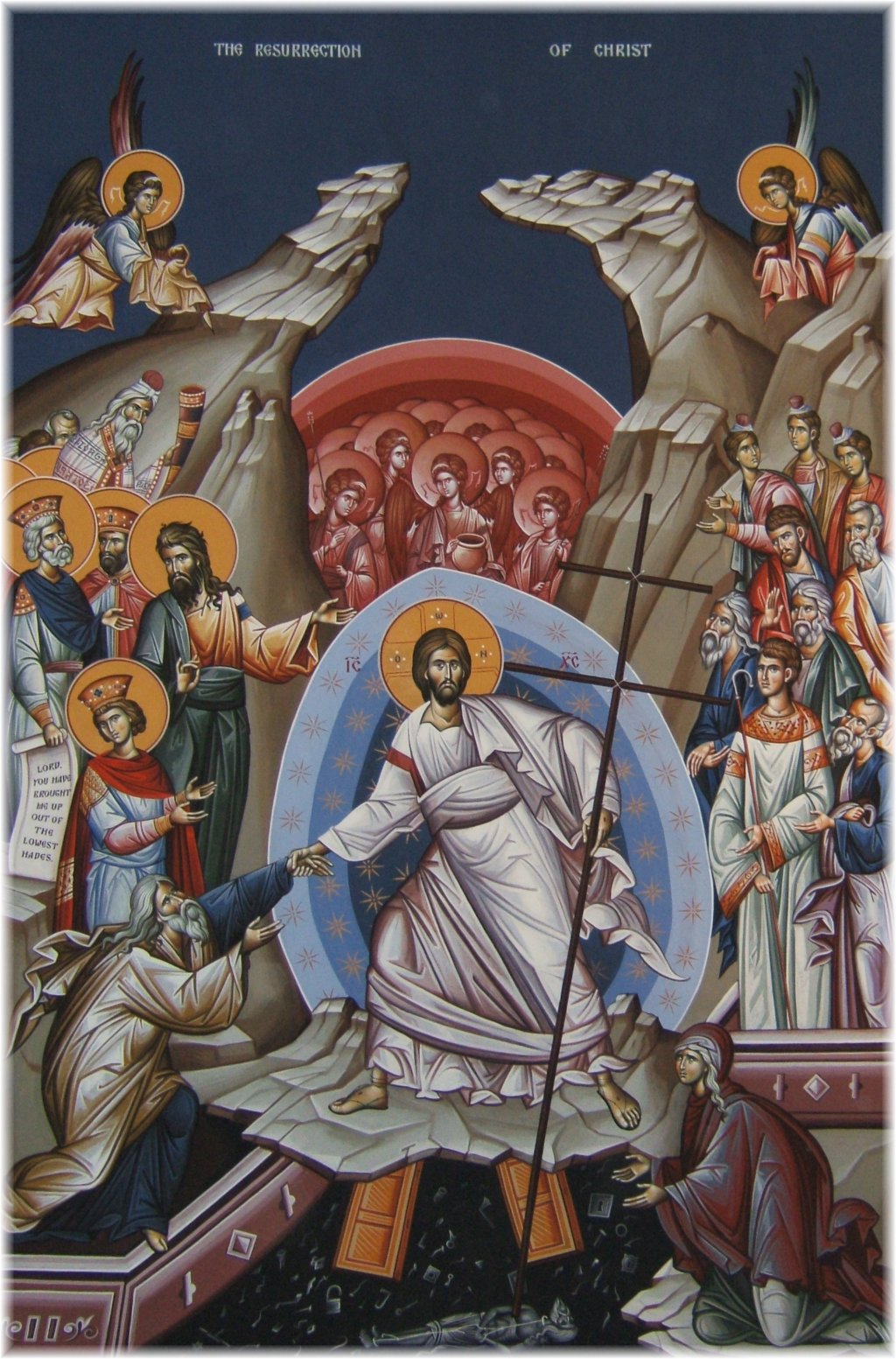
CHRISTOS ANESTI!

Resurrection, Dieric Bouts, c.1455, Norton Simon Museum

Wishing you a happy Easter: May the joys of this season bless all!

Tuesday, April 3, 2012

C is for Covenant

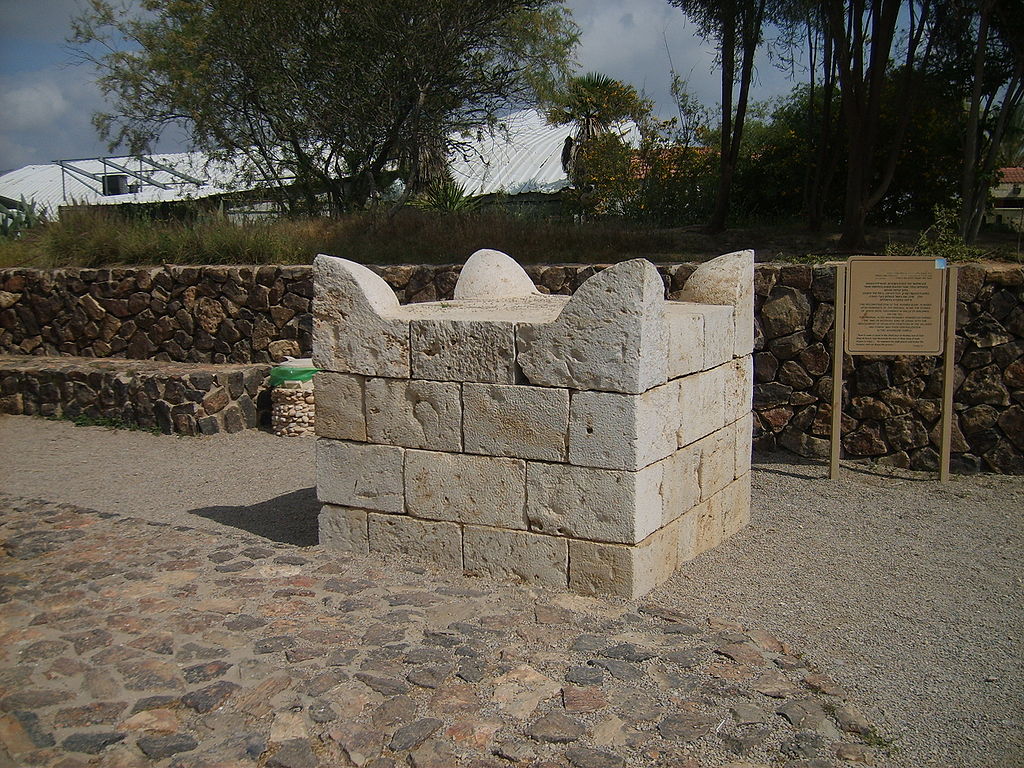
From blood yesterday, we move rather naturally to covenant today.  We use the term covenant to refer to a solemn agreement.  In the times of the ancient Hebrews, the equivalent terms to our Franco-Latinate English word were used not only by them but by all the people of the ancient Near East to refer to a pact, alliance, treaty, or contract.  In ancient times, there could be no covenant without the spilling of blood.  For this reason, those being bound by the covenant would sacrifice, call on their gods, and share in the sacrificial meal.  To cut a covenant (cf. our English, "cut a deal"), something had to be cut. Note that the sign of the covenant between God and Jews is circumcision.  See the instructive entry below from the Jewish Encyclopedia (1906).  I find the bit about sucking blood highly speculative not only because I have never heard that before, but because of the lack of evidence.  The mingling of blood by slashing hands and shaking is certainly known today.  Compare also the entry in SHERK.

Horned altar at Tel Be'er Sheva, Israel.

COVENANT (= ; Septuagint, διαΘήκη; Vulgate, testamentum).

—Biblical Data: An agreement between two contracting parties, originally sealed with blood; a bond, or a law; a permanent religious dispensation. The old, primitive way of concluding a covenant (, "to cut a covenant") was for the covenanters to cut into each other's arm and suck the blood, the mixing of the blood rendering them "brothers of the covenant" (see Trumbull, "The Blood Covenant," pp. 5 et seq., 322; W. R. Smith, "Religion of the Semites," pp. 296 et seq., 460 et seq.; compare Herodotus, iii. 8, iv. 70). Whether "berit" is to be derived from "barah" =to cut or from a root cognate with the Assyrian "berit" = fetter (see Nathauael Schmidt, in Cheyne and Black,"Encyc. Bibl." s.v."Covenant"), or whether both Assyrian and Hebrew come from "barah"= to cut (compare "asar" = covenant and bracelet in Arabic; see Trumbull, l.c. pp. 64 et seq.), can not be decided here. A rite expressive of the same idea is (see Jer. xxxiv. 18; compare Gen. xv. et seq.) the cutting of a sacrificial animal into two parts, between which the contracting parties pass, showing thereby that they are bound to each other; the eating together of the meat, which usually follows, reiterating the same idea. Originally the covenant was a bond of life-fellowship, where the mingling of the blood was deemed essential. In the course of time aversion to imbibing human blood eliminated the sucking of the blood, and the eating and drinking together became in itself the means of covenanting, while the act was solemnized by the invocation of the Deity in an oath, or by the presence of representative symbols of the Deity, such as seven animals, or seven stones or wells, indicative of the seven astral deities; whence ("to be bound by the holy seven") as an equivalent for "swearing" in pre-Mosaic times (see Gen. xxi. 27, xxvi. 28, xxxi. 54; Herodotus, iii. 8; Josh. ix. 14; II Sam. iii. 12-20; W. R. Smith, l.c. pp. 252 et seq.). Salt was especially selected together with bread for the conclusion of a covenant (Num. xviii. 19; see W. R. Smith, l.c. p. 252; Trumbull, "The Covenant of Salt," 1899).

Wednesday, February 22, 2012

Ashes to Ashes, Dust to Dust

"Remember, O man, that thou art dust, and to dust thou shalt return."

One of the greatest facts of human existence is mortality.  Our mortal nature touches our yearning and our dreaming; our loving and hating, our creating and praying.  Nothing human completely escapes the cold clay. Any mythopoesis that does not come, as far as it must within the limits of its art, to grips with the finite end of humanity is so far incomplete, imperfect, just as is any life that does not come to grips with it.  This Ash Wednesday, I wish you nothing that I do not wish for myself.  Death.  And life.


ASH WEDNESDAY by T. S. Eliot (1930)

I

Because I do not hope to turn again
Because I do not hope
Because I do not hope to turn
Desiring this man's gift and that man's scope
I no longer strive to strive towards such things
(Why should the aged eagle stretch its wings?)
Why should I mourn
The vanished power of the usual reign?
Because I do not hope to know again
The infirm glory of the positive hour
Because I do not think
Because I know I shall not know
The one veritable transitory power
Because I cannot drink
There, where trees flower, and springs flow, for there is nothing again
Because I know that time is always time
And place is always and only place
And what is actual is actual only for one time
And only for one place
I rejoice that things are as they are and
I renounce the blessed face
And renounce the voice
Because I cannot hope to turn again
Consequently I rejoice, having to construct something
Upon which to rejoice
And pray to God to have mercy upon us
And pray that I may forget
These matters that with myself I too much discuss
Too much explain
Because I do not hope to turn again
Let these words answer
For what is done, not to be done again
May the judgement not be too heavy upon us
Because these wings are no longer wings to fly
But merely vans to beat the air
The air which is now thoroughly small and dry
Smaller and dryer than the will
Teach us to care and not to care
Teach us to sit still.
Pray for us sinners now and at the hour of our death
Pray for us now and at the hour of our death.

II

Lady, three white leopards sat under a juniper-tree
In the cool of the day, having fed to satiety
On my legs my heart my liver and that which had been contained
In the hollow round of my skull. And God said
Shall these bones live? shall these
Bones live? And that which had been contained
In the bones (which were already dry) said chirping:
Because of the goodness of this Lady
And because of her loveliness, and because
She honours the Virgin in meditation,
We shine with brightness. And I who am here dissembled
Proffer my deeds to oblivion, and my love
To the posterity of the desert and the fruit of the gourd.
It is this which recovers
My guts the strings of my eyes and the indigestible portions
Which the leopards reject. The Lady is withdrawn
In a white gown, to contemplation, in a white gown.
Let the whiteness of bones atone to forgetfulness.
There is no life in them. As I am forgotten
And would be forgotten, so I would forget
Thus devoted, concentrated in purpose. And God said
Prophesy to the wind, to the wind only for only
The wind will listen. And the bones sang chirping
With the burden of the grasshopper, saying
Lady of silences
Calm and distressed
Torn and most whole
Rose of memory
Rose of forgetfulness
Exhausted and life-giving
Worried reposeful
The single Rose
Is now the Garden
Where all loves end
Terminate torment
Of love unsatisfied
The greater torment
Of love satisfied
End of the endless
Journey to no end
Conclusion of all that
Is inconclusible
Speech without word and
Word of no speech
Grace to the Mother
For the Garden
Where all love ends.
Under a juniper-tree the bones sang, scattered and shining
We are glad to be scattered, we did little good to each other,
Under a tree in the cool of the day, with the blessing of sand,
Forgetting themselves and each other, united
In the quiet of the desert. This is the land which ye
Shall divide by lot. And neither division nor unity
Matters. This is the land. We have our inheritance.

III

At the first turning of the second stair
I turned and saw below
The same shape twisted on the banister
Under the vapour in the fetid air
Struggling with the devil of the stairs who wears
The deceitul face of hope and of despair.
At the second turning of the second stair
I left them twisting, turning below;
There were no more faces and the stair was dark,
Damp, jagged, like an old man's mouth drivelling, beyond repair,
Or the toothed gullet of an aged shark.
At the first turning of the third stair
Was a slotted window bellied like the figs's fruit
And beyond the hawthorn blossom and a pasture scene
The broadbacked figure drest in blue and green
Enchanted the maytime with an antique flute.
Blown hair is sweet, brown hair over the mouth blown,
Lilac and brown hair;
Distraction, music of the flute, stops and steps of the mind over the third stair,
Fading, fading; strength beyond hope and despair
Climbing the third stair.
Lord, I am not worthy
but speak the word only.

IV

Who walked between the violet and the violet
Who walked between
The various ranks of varied green
Going in white and blue, in Mary's colour,
Talking of trivial things
In ignorance and knowledge of eternal dolour
Who moved among the others as they walked,
Who then made strong the fountains and made fresh the springs
Made cool the dry rock and made firm the sand
In blue of larkspur, blue of Mary's colour,
Sovegna vos
Here are the years that walk between, bearing
Away the fiddles and the flutes, restoring
One who moves in the time between sleep and waking, wearing
White light folded, sheathing about her, folded.
The new years walk, restoring
Through a bright cloud of tears, the years, restoring
With a new verse the ancient rhyme. Redeem
The time. Redeem
The unread vision in the higher dream
While jewelled unicorns draw by the gilded hearse.
The silent sister veiled in white and blue
Between the yews, behind the garden god,
Whose flute is breathless, bent her head and signed but spoke no word
But the fountain sprang up and the bird sang down
Redeem the time, redeem the dream
The token of the word unheard, unspoken
Till the wind shake a thousand whispers from the yew
And after this our exile

V

If the lost word is lost, if the spent word is spent
If the unheard, unspoken
Word is unspoken, unheard;
Still is the unspoken word, the Word unheard,
The Word without a word, the Word within
The world and for the world;
And the light shone in darkness and
Against the Word the unstilled world still whirled
About the centre of the silent Word.
O my people, what have I done unto thee.
Where shall the word be found, where will the word
Resound? Not here, there is not enough silence
Not on the sea or on the islands, not
On the mainland, in the desert or the rain land,
For those who walk in darkness
Both in the day time and in the night time
The right time and the right place are not here
No place of grace for those who avoid the face
No time to rejoice for those who walk among noise and deny the voice
Will the veiled sister pray for
Those who walk in darkness, who chose thee and oppose thee,
Those who are torn on the horn between season and season, time and time, between
Hour and hour, word and word, power and power, those who wait
In darkness? Will the veiled sister pray
For children at the gate
Who will not go away and cannot pray:
Pray for those who chose and oppose
O my people, what have I done unto thee.
Will the veiled sister between the slender
Yew trees pray for those who offend her
And are terrified and cannot surrender
And affirm before the world and deny between the rocks
In the last desert before the last blue rocks
The desert in the garden the garden in the desert
Of drouth, spitting from the mouth the withered apple-seed.
O my people.

VI

Although I do not hope to turn again
Although I do not hope
Although I do not hope to turn 
Wavering between the profit and the loss
In this brief transit where the dreams cross
The dreamcrossed twilight between birth and dying
(Bless me father) though I do not wish to wish these things
From the wide window towards the granite shore
The white sails still fly seaward, seaward flying
Unbroken wings 
And the lost heart stiffens and rejoices
In the lost lilac and the lost sea voices
And the weak spirit quickens to rebel
For the bent golden-rod and the lost sea smell
Quickens to recover
The cry of quail and the whirling plover
And the blind eye creates
The empty forms between the ivory gates
And smell renews the salt savour of the sandy earth 
This is the time of tension between dying and birth 
The place of solitude where three dreams cross 
Between blue rocks 
But when the voices shaken from the yew-tree drift away 
Let the other yew be shaken and reply. 

Blessed sister, holy mother, spirit of the fountain, spirit of the garden,
Suffer us not to mock ourselves with falsehood
Teach us to care and not to care
Teach us to sit still
Even among these rocks,
Our peace in His will
And even among these rocks
Sister, mother
And spirit of the river, spirit of the sea,
Suffer me not to be separated 
And let my cry come unto Thee. 

Thursday, February 2, 2012

Candlemas 2012

The Presentation of Christ at the Temple by Hans Holbein the Elder
I got a kick out of Sword & Dorkery's post today, as if there were a group of hardcore liturgical campaigners for the Feast of the Presentation of our Lord Jesus Christ in the Temple, AKA The Purification of the Blessed Virgin Mary AKA The Meeting of our Lord with the Prophets Simeon and Anna or CANDLEMAS out there to put down that blasted meteorological rodent once and for all!  Man, if there were, that'd be the culture war for me to join!  I hope we'd use spiked thuribles and aspergiliums:  Take that, you buck-toothed varmits!  WHACK!

On a personal note, this has been one of those days in my life were big things have happened coincidentally over the years: both tragic and joyful, so it remains a particular observance for me and for Mrs. Obscure.  A Clerk in Oxford has had several recent blog posts that I recommend to increase your medieval knowledge or to simply enjoy the beauties of the day. 

Best wishes for bright days ahead,
Theodric

Saturday, December 24, 2011

Christmas Eucatastrophe, Mythopoesis, and Life


I have said it before.  Undoubtedly, I will say it again: Tolkien's On Fairy Stories should be required reading on more than one reading list, but it should be at the top of the list for mythopoets.  If you are not familiar with his theory of eucatastrophe, then I highly recommend getting hold of the lecture in some form and digesting it thoroughly (and for greater reasons that that this blogpost will assume a familiarity with it).  In his epilogue, he included a statement on the faith that underlay all his work.  For in the end, eucatastrope was both the spring of his creativity and his thought, and also the deep hope of his life.

I would venture to say that approaching the Christian Story from this direction, it has long been my feeling (a joyous feeling) that God redeemed the corrupt making-creatures,  men, in a way fitting to this aspect, as to others, of their strange nature.  The Gospels contain a fairy-story, or a story of a larger kind which embraces the essence of fairy-stories.  They contain many marvels--peculiarly artistic, beautiful, and moving: "mythical" in their perfect, self-contained significance; and among the marvels is the greatest and most complete conceivable eucatastrophe.  But this story has entered History and the primary world; the desire and aspiration of sub-creation has been raised to the fulfillment of Creation.  The Birth of Christ is the eucatastrophe of the Man's history.  The Resurrection is the eucatastrophe of the story of the Incarnation.  This story begins and ends in joy.  It has pre-eminently the "inner consistency of reality."  There is no tale ever told that men would rather find was true, and none which so many sceptical men have accepted as true on its own merits.  For the Art of it has the supremely convincing tone of Primary Art, that is, of Creation.  To reject it leads either to sadness of wrath.

When I consider the general notions of what Christianity is about that are popular currency in the world today, and especially in America with which I am most familiar, whether those notions are entertained by Church people of various stripes or by the people who despise them, I am tempted to conclude some very unflattering things.  But then I remember that, despite my supposedly informed upbringing, I held similar notions.  These notions tend to center on a cluster of Sin, Faith (a rather peculiar notion of what faith is, honestly), the Death of Jesus, and the Bible.  Having been raised with this cluster in a version of its popular configuration, Christianity failed to make sense to me well into my adult life, until during my second graduate degree program in the field of religion, a professor assigned a little book from the fourth century: On the Incarnation of God by Athanasius of Alexandria.

This book revolves around the axiom that God became human so that humans might become divine.  The axiom is rooted in the New Testament and the key to the Nicene Creed.  If, this Christmastide, you find yourself wondering why a Galilean peasant and his fellow Jewish followers so transformed the world with a story that took the Mediterranean world by storm, consuming and displacing other stories and cultuses on an empire-wide and then a global level, I am not aware of a way to be more helpful when it comes to reading material than to recommend Athanasius' On the Incarnation (that, and skipping the chapters that are diatribes against Jewish conversationalists).  It is free in an old and difficult translation, and cheap in a new and easier translation.  Both normatively and descriptively, I would argue that it provides in a compact volume a formulation of what the Christian mythos and ethos are all about.

Wishing you all the blessings of the season,
Theodric

Tuesday, December 6, 2011

Jolly Old St. Nicholas' Day

James Christensen
Today is the feast day of St. Nicholas (either absorb the shock that it is not the 25th or join me in the Nicholas Propaganda Force), and I wish you joy of the day! One of the most popular post-biblical saints of all time, and still as an adult, he is one of my all-time favorites.  (I'll tease mystics and Jungians by mentioning that I had a big dream in which he appeared a couple of years back.)  The guy has a society, a center, and a village in Finland for postal and tourist purposes.  The figure of Santa Claus is perhaps the most popular individual figure subject to ongoing mythopoesis, and so I'm with C.S. Lewis here: he could show up in a piece of fiction or game in your future.  Did I say could?  Should.

A couple of reference entries: Wikipedia, The [Old] Catholic Encyclopedia, and the The New Schaff-Herzog Encyclopedia of Religious and Ethical Knowledge (which is also old, scans below).  Here's a more recent article and the entry at the Orthodoxwiki.


Sancte Nicolaë, ora pro nobis.

Tuesday, November 29, 2011

Much Better than Ground Steak Covered in Gravy


As Tomeful Tuesday draws to a close, I have to accept that my review of the latest Pathfinder Tales novel is not going to be finished.  So, I will trot out an oldy but goody to recommend to anyone who has yet to read it.  Salisbury is one of my favorite medieval cathedrals that I've never been to (yet).  Sarum is my favorite book about (among other things) one of my favorite cathedrals that I've never been to -- by one of my favorite historical novelists.  Rutherford, like Michener and Frank Herbert, covers large periods of time and helps develop the historical imagination.  Great historical color and detail, and a great learning tool for people who want to think about how to run extended or inter-related plots or campaigns across time.

Thursday, November 3, 2011

Badges of Faith: Wear with Pride

I have felt for some time that magical items for clerics in fantasy RPGs springing from the stock of the world's first role-playing game were generally less than they could be -- not simply in number, but in terms of interest and creativity.  Moreover, the presumption that only clerics (and other religious classes or sub-classes) would have a use for holy items represents a failure to make the game world as rich and interesting as the real world when it should meet or exceed that thresh-hold. 

Mike Welham has addressed this dearth in Rite Publishing's new Thirty Badges of Faith.

Click through cover to purchase

For me, this product addresses what is above all a world-building issue: historically, ensigns proclaiming one's religious beliefs and allegiance have been not merely valued, but invested by believers with real power.  For instance, it is no accident that vampires cannot abide the sight of the cross, and in Bram Stoker's Dracula, they may be wielded by anyone, and not simply by clergy with a special turn ability.

Welham offers for the PFRPG a minor magical item that fills this need perfectly.  Badges of Faith are worn about the neck (Pathfinder magic items are limited by their "slot," that is, location on the body) and grant a passive power to the wearer once they perform what amounts an act appropriate to the religious nature of the badge to "actualize" the power.  A further act of piety -- the completion of a clerically imposed quest -- "invests" the bearer of the badge with the fullness of its power.  (Cleric also have further possible benefits from badges of faith.)  Finally, the benefits of the badge stands beholden to not transgress a specific prohibition which will result in the permanent loss of access to the badge's power and the bestowal of a curse as divine punishment.

The mechanical benefits of these badges makes them appropriate to many different domains and deities, thus offering the wearer with an interesting variety of magical assistance.  This deserves to be highlighted: The badges follow the design principle of making loot part of the game's plot. The GM who adopts badges into his or her game is not only giving players a new kind of magic to enjoy, but gaining a spur to future play, encouraging certain actions in play and discouraging others.  With 30 badges to chose from, chances are good that you will find a badge to fit the needs of your campaign and your characters, but even if the perfect badge is not here for you, these examples herein will provide the necessary guidance for you to design a custom badge.

A couple of notes about the physical design of the pdf: there are a few places where line breaks or extra-spacing would make for easier reading: mostly a design issue, but at least in one spot an editorial one.  I find the font that is used for headings to be unclear and hard to read when used at the size found in individual badge names.  I am a fan of the use of old, public domain art in pdfs, and I think that most of the choices here in BoF are good, though a few probably could have been improved with more searching of old book archives.  A final picayune problem: putting a number sign in front of the title gives the impression that this is a number in a series (i.e., Number 30 in Rite Publishing's line of Awesome Artefacts!), when the series title is simply indicating that there are 30 badges.  The author is to be congratulated on the thought and imagination that went into the work.

Monday, October 17, 2011

More Ancient Persian Inspiriation for Aryanistan

Faravahar-Gold by Shaahin

I picked up some books on ancient Persia and Zoroastrianism in the library further research into one of the important lands of Ygg.  (So far, I have been working with Mary Boyce's Zoroastrians: Their Religious Beliefs and Practices.)  Though Norse mythology was my initial inspiration, and the Northern realm is where I planned on starting out with PCs, Aryanistan, drawing inspiration from central Asia and Iran, is the largest empire in Ygg.  Below is a C/C table on the two great religions of Aryanistan, the first which has the broadest popularity and the second which is the royal patronage and popular with ambitious nobles.  Some of the ideas are firmer than others, but I liked the direction that it taking as weave game elements and historical elements into this proud, though conflict, imperial behemoth. 


May the winds of inspiration blow upon you, this Mythopoeic Monday!

Friday, October 14, 2011

Calendar Creation for Fantasy Settings III

Perhaps even more important than the names of the months and major holidays for a setting are the names of the days of the week. Again, you can see that I started with the day names we are all familiar with, and then brought them over into the setting whose pantheon I had been working on.  (That is, the kind of amalgamated, customized D&D setting that I was working on awhile back and that I featured in the other Calendar Creation posts, I and II.)  I think that both elements are important.  The former means that the players have a good shot at learning the names, while the latter communicates to them a feel for what figures are important in the world or for what denizens of the world will tend to associate with the day.  (Note that, comparing it to the Celestial Hierarchy post, all of the seven highest -- and one of the lesser --  members are represented in the days of the week.)


    Sunday                (Honors Pelor and Taiia)
    Mumday             (Honors the Blessed Mother)
    Ehlsday               (Honors Ehlonna)                  
    Moradinsday    (Honors Moradin, usually pronounced "Mordinsday")
    Bahamutsday   (Honors Bahamut. usually pronounced "Bahmsday")
    Oliday                  (Honors Olidammara)           
    Satisday              (Originally honored Anqet)    Satisday from the same root as "sated, satisfaction,"     a  word derived from the name of the River Satet, created by the sacrifice of Anqet which saved the people of ancient times.  

Wednesday, October 5, 2011

Calendar Creation for Fantasy Settings II

This is a follow-up to my first post about calendar creation. Below a bit fuller version of the calendar I introduced before.  My basing it on our earthly calendar, while trying to sand off some of the rough edges of forcing a solar year (360 days) together with lunar months (or 30 days) probably still has some issues I haven't caught as I translated our system to a more perfect (convenient) solar system.  Sorry for the ugliness of format.  I've done what I can to minimize it, but copying and pasting into Blogger is a trial.  Noted below are holidays, observances, and unholy days.


Djinnuary

    1            New Year    Celebrating the Creation or the Ordering of Creation    (This day is the day of the world's perihelion, that is, it is closest to the Sun in its orbit.)

    14/15   Genies' Ball - Celebrates the cooperation of the majority of geniekind in the crafting of the world and in containing the rebellion of the Efreet. 


Phantomuary

    1            Day of Preparation

    2            Day of Infant Dedications, Blessing Lights, Night of Purifying Lights

    13/14    Bonfire Night followed by Day of Incense

    14/15    Hallowing of Graves (Nights of the Full Moon)

    ~28-30 (Days of the Dark Moon)    The Purification of Women


Maahes


    1            Festival of the Fleet (celebrated by foot races, horse races)

    4            The Death of Gax Longspear

    7            Festival of the Shaft (Archery, Javelin toss)

    14          Festival of the Fist (Boxing and Wrestling)

    ~20/21 Vernal Equinox    Celebrating Pelor's Ascendency over Hextor

    28          Manhood Day (Coming-of-Age)


Alluvinth  


    1            The Day of Calling (Celebrated by dousing things & people with water, playing of percussion.)

    7            The Death of Arne the Beloved

    14/15    ?

    30/1     Sequestration of the Pre-Maidens


Maidenth    


    1           Parade of the Maidens  (Among the tolk, this is done to honor Kora.  In Miżraim, it centers on Anqet and follows celebration of the inundation of the River Satet.) 


Jondallanth


    1           Early Harvest Festival (Early growth plants displayed, prepared, and consumed in Garden Parties and Evening Banquets)

    7           Manifestation of Yondalla

    14         Trooping of the Tolk

    ~20/21  Summer Soltice    Dances held in Taiia's honor (92 days after the Vernal Equinox, 243 days until the next VE)

{Fortnight of the Shalm's Hunt (last week of Jondallanth, first week of Jeironeonth.} 


Jeironeonth

    9           Heironeous' Birthday (Days in-between are time of final preparation of candidates before their knighting)

    19         Apotheosis of Heironeous


Jondallanth 


    The Urromite (and Drachandian) festivals are not celebrated outside of their realms.  Local countries or cultures may have their own festivals in this month.  In areas that used to fall under Urromite domination, the month if often a time of elections, enthronements, and other political activities.  The end of the month for them is often a time of freedom festivals, burning imperial effigies, and celebrating liberation/independence. 


Serpenfer


    14/15       Olidammara's Revels for Bahamut
    ~22/23    Autumnal Equinox    Pelor's & Bahamut's Obeisance   (94 days after the Summer Soltice)

    ~28-30   (Days of the Dark Moon)    Festivals of Usaht and Tiamat 


Orcover


     This month is sacred to followers of Orcus, the Lady of Pain, Gruumsh, and also those of Hecate.

    1              Abduction of Kora    (In many cultures, this day is a day of mourning among maidens.  Among the tolk, it is a day of mourning for all mothers.)

    ~28-30  (Days of the Dark Moon)    Days of the Dark Horde, also Hecamass

    30           Many cultures burn effigies of Orcus on this day. 


Necrember

(Dates in this color are the Ancient Miżraim observances and have no universal application.  They could be important for an adventure, though.) 

      This month is sacred to followers of Nerull and Charon.  It is also the month that followers of Set undertake crusades.

    1-14       Days of Embalming

    14/15     Day of Entombment, followed by week of standing guard    Harvest Home Festival aka the Harvest Moon: celebrates the end of late harvest & stocking for winter.

    21           Decoration, Stocking, Sealing of Tombs

    28           Offerings to Dead, Dark Moon of Necrember: Death of Obad-Hai, ritual observed 7 following days.

    30           Celebration of the Dead's Exaltation 


Delighnth


    ~21/22    Winter Solstice     Prophecy Day ( or "Nativity of Hope")   The Festival lasts until New Year's morning,  thus lasting approximately 10 days, depending on the way the solar year falls.  In some cultures, the festival continues throughout the entire intercalary month as well every sixth year. 
                

Monday, August 15, 2011

Myth-Making & the Spirit of Inquiry

An Artist Who is Looking for Commissions

For why-wolves, possessed as we are by both the spirit of Inquiry and the spirit of Bloodlust, it is natural to ask why have humans engaged in the making of myths?  For the historically-minded, answering this question would, among other things, give us historical context in which to ask why do humans engage in myth making?  At this point the major attempts to answer this question that are still popular seem to me to fall out into five broad tendencies, the last one, arguably, ahistorical.


  Five Kinds of Mythological Theory
  1. Humans created myths due to confusion about the past. (Euhemerism, F. Max Müller)
  2. Humans created myths as hypotheses to explain their world and how it works.  Myths have Ritual as their corollary.  (Edward B. Tylor, James G. Frazer)
  3. Humans created myths to create group identity and control behavior.  Myths are a major feature of Society.  (Plato, Karl Marx, Emile Durkheim, Bronislaw Malinowski)
  4. Humans created myths because they were inspired to receive important encoded truths.  (Plutarch, Origen of Alexandria, Eusebius of Caesarea, C. S. Lewis -- and in very different ways, Rudolf Bultmann and J. R. R. Tolkien)
  5. The creation of myths is actually an expression of the Human Sub/Unconscious. (Sigmund Freud, Carl Jung -- and thence, perhaps, Joseph Campbell)
Now, if you are one of those people whose eyes start glazing over when conversation turns historical, think about this.  If you want to skip history and say, "Who cares?  We make myths because myth-making is fun!"  Then how do you answer this: Why is myth-making particularly fun?  Why not just rather write romance novels, comic strips, cartoons, horror short stories, TV Western scripts, screenplays for blockbuster action movies?  Further, as significant as enjoyment is, there are questions of power and resilience entwined with considerations of entertainment: myths are a lot older than the other genres, and signs suggest that they are not declining any time soon.  Beyond that is the possibility that they exercise a profounder pull, a deeper reach, and not merely a longer lasting and more popular appeal.

Wrestling with theorists on the one hand and my own attempts to make various kinds of sense (history being but one way) out of mythos (originally "story, narrative, plot")  on the other, I am always alternating between fascination and frustration.  One the one hand, there is an abiding sense (or at least suspicion) that there is a unified something behind or beneath mythology, whether that something is human or divine or both.  On the other there are the errors of the theorists, their prejudices (both good and bad), and the resistant particularity of any given mythological datum.  Perhaps the fascination and the frustration are just two sides of the same coin.  Lack of consensus on whether the categories true/false apply to mythos, what it is, what it is about, what it is for, and how it works does not dampen the attraction of the mythic field and thus makes the search for theoretical answers persist in the face of such a lack of consensus.

The Encyclopedia of Religion and Society has a number of helpful entries that are worth checking out, including many of the figures named above.  Sadly, there is no entry for Myth.  But there is for Demythologizing!  Really, editors?  Still, I am happy that at least one contemporary reference work of religion is available for free online.  Theoretical entries fall in an area where dating is a more serious problem in older works, such as the New Schaff-Herzog Encyclopedia of Religious Knowledge.

I hope this week's Mythopoeic Monday stirs your interest in such questions.  One place to begin furthering such interest is to start with Robert Segal's Very Short Introduction: Myth (Oxford), though this work will only introduce you to modern theorists.  Finally, I'd like to thank Trin and Droz for taking time in their post-Gen Con recovery to blog about their experiences in Indianapolis early this month.  Thanks again, guys!

According to at least one mythos, all questions stop with the Cosmic Owl.

Tuesday, April 26, 2011

V is for the Veneration of Ancestors

Photo by Mitch Young


Given the importance of ancestral rites for ancient societies such as the Egyptian and the Roman, and the widespread persistence of them in African and East Asian societies, as well as the form that it takes in the cult of the saints, I am dissatisfied with the ancestors' almost total absence from religion in role-playing settings.  Yesterday's work on an Underworld (here and here) made me think about the destiny of the dead in that incipient setting.  Hel assumes Valhalla: one place for those who die as heroes, another for those who die of sickness or old age.  The fact that my mind has been in the native Chinese religions in recent weeks (and perhaps my own Christianity) creates some dissatisfaction with the majority of people being ignominiously consigned to hel.

For this setting, I would introduce a division in hel for the mediocre majority from the miserably damned: the Valley of the Shadow of Death for most dead, and the Pit of Perdition for the wicked.  While the heroic dead could be called upon for aid like patron saints, the mass of the dead could be placated with ancestral rites.  This would be an explanation for the rites, and neglect of the rites that would reconcile them to their fate would be one major cause of the curse of the undead.  Perhaps the appropriate rites could even insure an eventual reincarnation for the mediocre dead to give them another shot at glory.  There could also be occasions where spirit possession would be part of the rites.  This cosmological detail could give rise to interesting ties with certain spells in the game and new possibilities for adventuring plots.  In short, it is full of world-building and role-playing potential.

For a very elaborate and public practice of ancestral rites, see the Korean festival of Jongmyo Jerye.

Sunday, April 24, 2011

Interlude for Paschal Greetings

Christos Anesti!

Wishing you a Happy Passover, Happy Easter, and Happy Spring.

Friday, April 22, 2011

S is for Sacrifice III: Gaming

Part III: Sacrifice in Role-Playing

In this installment of "S is for sacrifice," I explore two ways in which sacrifice can contribute to your gaming: sacrifice proper and the sacrifice of characters by your players. 

Religious Sacrifice
Before the loss of the Jewish temple and the substitution of the bloodless sacrifice tied to the blood of Christ, religion everywhere was dominated by the immolation of victims as an offering to the numen or numina.  I'm sure this happens in your games, but I bet when it does, it is usually something like this:

Frank Frazetta, Sacrifice, 1980 - Cover for a Conan book
Now, there's nothing wrong with this as far as it goes.  Villains that are unholy are especially villainous, and saving beautiful innocents from their clutches is hitting about eleven fantasy buttons at once instead of just one.  But beyond its cliche, and potentially chauvinistic, use, it ignores the fact that sacrifice is and has been a dominant practice in religions that are not summoning devils or waking Cthulhu.  To give the religions in your game setting some substance, look into adding sacrifice, whether as background world-building, plot elements, or even mechanics.  But the characters sending their sweet-smelling sacrifice of some quality barbeque heavenwards is nothing compared to them offering themselves.

Heroic Self-Sacrifice
Above all, I am thinking of the players sacrificing their characters, and the characters sacrificing themselves in-game.  Note I'm not talking about taking a risk that the player-characters recognize could result in character death: they do that all the time in the game, and they generally do it for character gain.  I mean making a decision for the good of others, which the player-characters enact in the knowledge that death is likely or even certain in the attempt to bring about the altruistic outcome.  Being saviors, rather than simply the greatest achievers, is the height of heroism.

Why would anyone want to do this in a game?  To achieve the pinnacle of heroism is obviously a motive on the player side of he equation, more than the character side.  It could be the denouement of the player's character development.  It could be the attainment of some great goal that they have long been gaming towards.  Experienced gamers know nothing is as dramatic as death, so this will make your game dramatic like nothing else will.  I should say, death that is not stupid--experienced gamers have also seen some pretty lame deaths in their days, as well.  But just imagine the possibilities when the players have been empowered to achieve meaningful deaths for their characters.  In all the creative and exciting things I have done in my (cough, 30) years of  gaming, I've never done this intentionally, and I owe the idea to my college DM, who discussed the idea with me on the phone recently.  (Commendations to you, K.A.)

I hope I don't need to argue that suicide for escape, dramatic effect, or for religious reward is not heroic self-sacrifice, but selfish acts that at best on masquerade as heroic self-sacrifice.  If done well, I'll wager players will never forget their heroes' deaths, and it can then be folded into the world-building so that it is an ongoing part of their new characters' experience.  Just don't make the mistake of role-playing Valhalla.

ST2: The Wrath of Khan.  "The needs of the many..."

S is for Sacrifice II: Tangled

Part II: Sacrifice in Tangled


A French version of the movie poster, because I like it.


A potential problem with the shift in the way we use the word "sacrifice" is that it is now becoming just another word for "trade."  In baseball, a batter sacrifices something that will appear on his record to get another runner home.  He hardly sacrifices himself in any significant way.  That is, his act is only sacred to baseball fanatics in a stretched sense, and there is no immolation of a victim.  Because of the inherent importance of the theme of sacrifice, and the challenges that if faces, including ones from the shift of language usage, I was happy to see the theme taken up by the animated film Tangled.

{Spoiler Alert}

I quite liked Disney's retelling of Rapunzel, but there is one area that I found it unsatisfying.  The film begins with a narrator identifying himself and other characters as he sets the story up, and he mentions that he died.  The viewer immediately begins questioning, "How did he die?  How is he speaking to us?"  This is good story-telling, and it saves the kiddies the shock of dealing with Flynn Rider's death later.  Of course, now you have the problem of how a dead character is narrating the film, but I'm more willing to simply accept that the dead can cinematically address audiences from faerie land than I am the nonsensical resolution that the film offers for Flynn's Easter.

You see, Flynn, the charming rogue, actually comes to care for Rapunzel, for her life and her freedom and happiness, more than for himself.  In the final conflict, he offers himself to violence so that Rapunzel might escape the tower.  Rapunzel herself was a victim to her false mother's quest for continued life and beauty, and Flynn's intervention substituted himself to Mother Gothel's violence so that Rapunzel could finally escape her fate and gain the freedom of self-determination in the outside world and reuniting with her true family.  Flynn should have been allowed to make this sacrifice.  He was robbed and so were we.

My objection is not that Flynn was raised from the dead: I could not make such a claim on this day, nor even as a rambling disciple of Prof. Tolkien.  It is the way in which Flynn is raised.  For Flynn takes up the priesthood not only in his heroic self-intervention, but in the moment of inspiration when he sees that by sacrificing Rapunzel's magical hair, she will be set free.  At the crucial moment, he seizes her hair and cuts it off.  Rapunzel loses her magic, then Flynn looses his life to the witch's rage. 

Eucatastrophe* in fairy-tales leads us to expect the happy reversal at the end.  If that reversal is to be Flynn's resurrection, it cannot come at the price of the inner consistency of reality that allows the fairy-tale to exist in the first place.  Or to switch from Tolkien to Chesterton, Faerie must obey its own Law.  In Tangled, the magic was in the hair and cutting the hair killed it.  The magic that could hold back death has died.  There either has to be some other magic or some way of restoring the magic.  Tangled resorts to the canard of the true love tear bringing back the dead.  If there's magic there, it has got to operate by established Law.  Verisimilitude is broken and so our belief is sacrificed for Disney's bottom line.  Tangled kicks us out of Faerie for the price of a happy ending.

Perhaps this could have been remedied with deeper thought and better story-telling, but the simple answer is to have let Flynn die.  Instead of emphasizing the romance between the two characters, emphasize the moral growth of Flynn from his self-centered, immoral use of his freedom to his appreciation of what it would be like to be robbed of one's freedom.  Emphasize Rapunzel's desire to be free and the negative consequences of her victimhood.  Maybe even introduce the temptation to Flynn of profiting from Rapunzel's hair as something he has to overcome.  Then when Flynn sacrifices the magic hair and himself, we cheer and mourn the hero, but the movie ends with Rapunzel's free life and gratitude to a thief who redeemed himself by saving her from a greater thief.  This would have put Tangled among Disney's darker animated features, but it would have also made for a truer tale.  I think there is a good chance that Tangled's success will get Disney executives to reverse their decision to move away from fairy tales, but hopefully they will learn from their mistake and produce better retellings, rather than simply reaffirm a happy ending at any cost.  If children can deal with a story with death, and have to learn to deal with death in real life, then they can learn about the nobility of sacrifice.  It's not so much that Disney needs to get out of fairy-tales, as it needs to get deeper into them and to get out of their formula.  Not ever fairy-tale has to end in couplehood and not every fairy tale death has to wake from true love's kiss.  Fairy-tales are, in fact, more tangled than Disney has made them out to be.  But however they end, they cannot break the Law without breaking the Enchantment.

*Coined by Tolkien in this work.

~Next~
Part III: Sacrifice in Gaming