Showing posts with label Tomeful Tuesday. Show all posts

Tuesday, June 11, 2013

Survival Tips for the Frustrated Fantasist


“Life is what happens to you when you are trying to game and blog.”   
Th. the Obscure, D.M. (Doctor Mythopoeiae)


So, long-time readers already knew I was having an academic year that was consuming my life.  I added a new home and everything that goes with that into the mix and recovering from an injury, and all blogging and gaming pretty much disappeared from my life.  (I might could have squeezed in a little gaming, if similar things hadn’t happened to the members of my little group.)  The flame would have gone out over here if it were not for Mike Welham and Craig Johnston (thanks, guys!).  So, how have I been surviving this challenge to La Mitopoietica Vita?  I have to read.

Part of this is just my personality.  Recreational reading helps me to retain my humanity and my sanity.  I must read.  (Feel free to google for escapsim quotes by C.S. Lewis and J.R.R. Tolkien, then come back.)  I need fantastical fiction.  My primary recourse in these months as been to the ever-reliable Steven Brust.  I have read seven Vlad Taltos novels (see picture above) and two of the Khaavren romances (see picture below). 

Damn, Brust can write.  Dense, complex plots for this genre, but not so much that you choke on them.  Intriguing characterization that makes me care about characters that I can't imagine caring about if all I had was a bare-bones character sketch of them.  And while he's not my favorite world-builder, he does a lot in his under-stated way.  And the things that stand out (the Houses, the Orb, the Cycle, the reversals or twists around "humanity" are enjoyable and make the world alien).  When it comes to food, he's the Patrick O'Brian of fantasy food.

If you haven't treated yourself to Brust, I'm telling you he is on my required reading list and you don't have to give me anything in return for the recommendation, though your comments are always appreciated.  If you haven't heard Atomic Array's interview of him, I recommend that, too.  He's done a fantastic job of keeping me fed as a Mythopoet under pressure and short of leisure.  How will it inform my gaming when I return?  I think that Brust's swashbuckling in particular will be an excellent inspiration when I can return to Swords & Wizardry in Waterdeep, and the politics among the Dragaeran houses could give me fuel for what to do with the noble houses of Waterdeep.  All this will be in the cooker when I can return to gaming.


So, what I am reading while I'm taking a break from my Brustian bacchanal?  An Elric reread: I'm closing in on the end of volume 3 in Del Ray's excellent definitive collection.  After that, I may read Paths of the Dead or stretch things out a little more by inserting a collection of Peter S. Beagle's short stories.  I picked it up here in San Antonio when The Last Unicorn tour came to town.  (While the first leg of the tour is done, keep an eye on the website for future developments in your area which will be forthcoming.  Seeing Rone Barton in action and having a conversation with Peter are worth the price of admission alone, but I was impressed by how clean the copy of the TLU is.) Well, that's it for this Tomeful Tuesday.  Baby steps back to blogging, my fellow ramblers, baby steps.


Tuesday, February 12, 2013

Drinking in Waterdeep

It might not be obvious how this belongs in Tomeful Tuesday, but I'm actually asking for help I'm not finding in the books I have -- or online, for that matter.

I had a one player game Saturday night due to some unfortunate circumstances with the other player, so there was lots of time for him to get to know Waterdeep.  (I'm having fun bringing my own versions of local NPCs to life.)  It's a dance of making stuff up and reinterpreting to suit myself and the game, but also wanting to have a sense for myself and the players of what the shared experience of Waterdeep is for gamers and readers.

Zzar is the margarita of Waterdeep, culturally speaking, says this Texan.  There's an accepted description of how it tastes: a dry white sparkling wine fortified with almond liqueur.  So I was surprised to not be able to find a description of how elverquisst -- the almost totemic elven wine in the Realms -- tastes.  How is that not in Volo's?  Or E.G. Presents the F.R.?  Or in the F.R. Wiki?  Are things elvish so ineffable?

Any setting sommeliers out there who can help a brother out?

Tuesday, January 29, 2013

Bewitched by a Winter's Tale


No, not Shakespeare's, but Elaine Cunningham's.  Recently the recipient of a less-than-pleased review, I am happy to report that this is not the case with the author's Winter Witch.  In fact, I am enjoying this book even more on the second read.  And check out the awesome Advance Reader Copy with the beautiful Jesper Esjing cover!  I won that from an Atomic Array contest, and have been meaning to give it to my daughter ever since.  Yeah...it's not easy letting go -- maybe after this reading, since I did the first one out of the mass market paperback that came with my subscription.  I'll wait to give my final grade once I finish, but for now, I'm loving the setup and lots of little details that I did not notice in my first reading, when I gobbled the story up.  I can't help but think that there's a lot of little Easter eggs and nods in here.  Oh, and some fellow named Dave Gross apparently chipped in.  Maybe you've seen him around.  So, thanks to this Pathfinder Tale, I'm coping with all the crazy warm weather down here in South Texas that keeps it from feeling like winter.

On the finished front, I've now read through the three Waterdeep books in the first Ed Greenwood Presents omnibus.  Blackstaff Tower, Mistshore, and Downshadow.  All are quite enjoyable, in spite of the setting later than I prefer and all the Spellplague business (more prominent in the last two novels).  I'm not sure I'm going to grade these.  For now, let me just say that it is hard to choose between Blackstaff Tower and Downshadow, but all were pretty strong on character, which seems to me one of the pitfalls of the genre, and my annoyance with timeline and Spellplague were overcome by the characterization and plots.  The latter, while not particularly ambitious, ranged from serviceable to more than serviceable.  So, I'll be on the lookout for the second Waterdeep series.   All fodder for future Tomeful Tuesdays.  Happy reading!

Tuesday, January 22, 2013

Recent Finds in HPB


Special Late Bonus Edition!
A recent trip to HPB (15% coupon firmly in hand) found the two above books: a Zelazny I had never heard of (which worked out well last time when I found Changeling) and the Dungeoneer's Survival Guide.  I didn't have the latter back during my AD&D days, and it was a good deal to expand my collection.  It also may provide some inspiration for Undermountain in my Swords & Wizardry in Waterdeep campaign.

Happy hunting, bibliophiles, and may all your Tuesdays be tomeful.

A Splendid Start in Waterdeep Ends Sourly

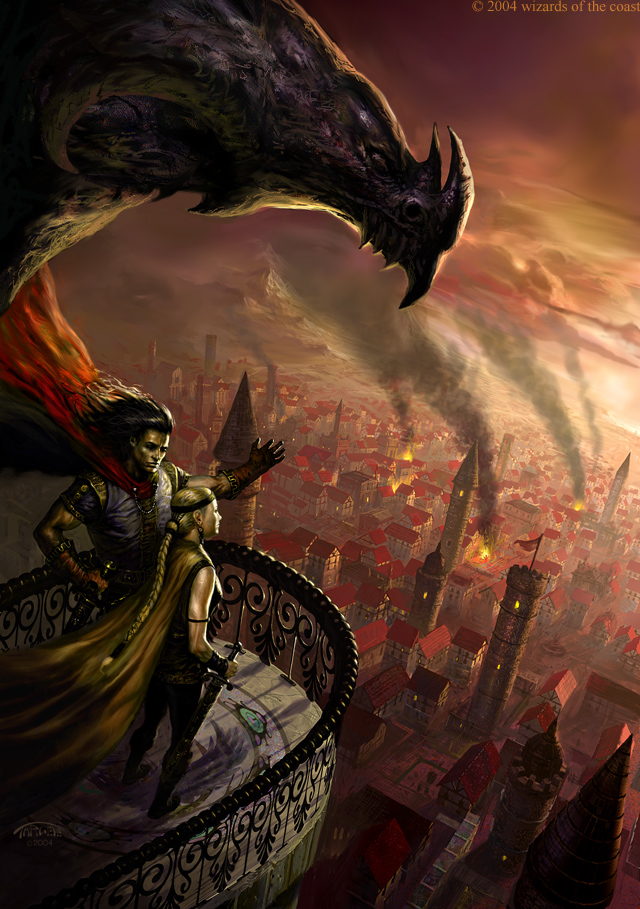
Targete's dramatic cover illustration

There are times when one takes joy in giving a bad review: when one feels oneself or something closely connected to one's self wronged by the author; it's a sort of joy in holy destruction.  But I doubt that anyone of goodwill who has had interactions with Ed Greenwood and Elaine Cunningham could enjoy delivering a bad review of one of their books.  Their interactions with me online -- just one fan among so many -- shows them as gracious as they are imaginative.  So I've been in no hurry to write this review, and even thought about not writing it.

There's a special kind of pain as a reader when one has gotten drawn in by a book and seduced by its attractions, only to find the ending disappointing.  City of Splendors paints the best portrait of Waterdeep that I have found in fiction so far -- even more so than Cunningham's enjoyable first two Songs & Swords novels.  I cared about the characters.  The villains were interesting.  I ogled the setting like a hungry tourist.  What soured me on the book was the twist ending, which I found unbelievable on the level of characterization, as well as a bait-and-switch of my readerly sympathies.  To compare it to the two novels I just mentioned, it has a lot more going for it up to the point where two of the main noble characters switch identities, but this critical misstep means that, as a whole, it squanders the advantage it has for the majority of the story on the surprise twist.

While I will continue to recommend it as a introduction to Waterdeep, it will be with the warning that an unpleasant twist lies ahead to soften the jar the reader will suffer.  A denouement that undoes so much of what the novel previously accomplished must greatly effect my assessment of it as a novel.  Since I can still see a use for it apart from plot resolution, I will soften the harshness with which I grade it.
Grade: C-

Tuesday, November 20, 2012

What Last Month's Halloween Reading Did


I posted very briefly about last month's Halloween reading: Anno Dracula and 'Salem's Lot.  They reminded me of an important lesson I learned, at least back when I read Bram Stoker's original novel, if not earlier.  As Van Helsing realized, he was dealing with a manipulative genius, who for most of the novel proved himself a mastermind always one step (at least!) ahead of his opponents.  In Kim Newman's novel, it is easy to believe that this is how he rises to become Royal Consort and de facto ruler of the British empire (I could say more, but I'll avoid spoilers).  The vampire in Stephen King's modern classic is of the same stamp as Dracula -- a fact which the Van Helsing analogue among the latter-day vampire hunter characters explicitly acknowledges.

Vampires in fiction and gaming should follow this line if they want to evoke the same kind of responses.  The vampire should be more than a feral undead predator of the living.  The ghoul is more on this level, and Nosferatu starts to tilt in that direction.  For myself, I intend to work harder the next time I use a vampire to portray the villain as a creature at least as intelligent as it is evil -- a planner, a manipulator, a strategist of the highest order.  A GM should be thinking about how the vampire could reasonably anticipate players and keep them reactive.  There should be enough cat-and-mouse where the players understand that they are the mice and they are in real peril -- even if they prevail, some cruel suffering on their part would seem unavoidable.

I'd love to hear any stories or tips of effective use of the vampire.

Tuesday, November 13, 2012

Sunday's Book Haul

This Sunday was one of Half-Price Book's coveted 50% off coupon days.  I visited three stores in the area and found two books I'd been looking for and one book from the AD&D's 2e era that I decided was worth having.  I hope that the third book in Stephen Hunt's steampunk series is better than the second one, since I enjoyed the first one a lot.  Wendy Doniger's The Hindus is magisterial if you are looking for a comprehensive historical work on Hinduisms.  What riches did the Ramblers reel in?  Make me jealous!

Tuesday, November 6, 2012

Dave Gross, King of Paths

The end of last week brought me my Paizo subscriptions box, and among the contents was the newest volume of the Pathfinder Tales: Dave Gross' Queen of Thorns.  Even with a lot to do, I gobbled it up over the weekend.


This, the third offering from Gross in the PF Tales line crowns him as the undisputed king of the line, and should secure a wider reading for the Jeggare/Virholt novels. (Be sure to start with the "Pawns of Hell" serial fiction that introduced the characters in The Council of Thieves Adventure Path.)  What is it that fuels my bold claims?  Perhaps Gross has some competition when it comes to energetic plots and world evocation, but when it comes to character development that is satisfying and sophisticated, there is no beating the arc of development that he has traversed so far with Varian Jeggare and Radovan Virholt.  It is hard to beat in any contemporary fantasy of which I am aware -- in a class with James Enge in Blood of Ambrose, Zelazny in the first Amber series, and Howard Andrew Jones in The Desert of Souls.  (A couple of Vance's characters in the Lyonnesse series get close and perhaps Vlad Taltos in Steve Brust's novels will rise to this level -- I've only made it through the first set of the Taltos series, so I'm undecided in that case.)

If you have been holding off from Pathfinder Tales, dive in and read these three together first.  If you have been looking for a fantasy series that will take you on a varied ride with compelling characters and amazing changes of scenery, look no further -- Gross will take you from Golarion's analogue of silverscreen Transylvania to its fantasy Orient (major martial arts films homages) to its Faerie in this last volume.  Just try and beat that.

I keep trying to think of something to be more critical of, but I'm afraid Gross has pulled an A+ on the Mythopoeic Obscura grading scale.  Disputers are directed to the paladin below.


Tuesday, September 25, 2012

Paizo and the Art of Book Covers


 The older Planet Stories covers above are awesome.  Above is a selection from my library.  Most of the covers are by Andrew Hou.  The Kline covers are by Daryl Mandryk and Brandon Kitkouski, respectively.  The Moore cover is by Arnold Tsang.  Sadly, at this point, I'm still missing from my PS collection Brackett's wonderful Skaith books.  James Ryman did the covers for Paizo.  Let's not deprive ourselves of the pleasure.  Below is his illustration for Hounds of Skaith.


After the redesign of the Planet Stories line,  Kieran Yanner appears to have gotten a lock on the series.  I struggled a bit to get decent shots of them, so I took doubles.


Leaving aside any judgment on the two different formats (I'm truly torn on which I like best), the suspended series did a wonderful job of taking inspiration from the past and producing new, attractive art that generally was well-grounded in the contents.  When Paizo started its Pathfinder Tales line, it faced the new challenge of providing quality covers for the much smaller mass market paperbacks.  I guess it is not surprising that a line of new fiction, tied to the RPG setting would go with totally different artists than those used for the reprint line named for a classic pulp periodical.  But while I enjoy most of the illustrations, and they aren't bad, I generally haven't loved them like I have most of the PS covers.  Check out the line so far below.


 Of these, the best so far of PF Tales seem to me to have the same kind of feel as the best PS covers.  Those would be Lucas Graciano's for Master of Devils, Kekai Kotaki's for Death's Heretic, J.P. Targete's for City of the Fallen Sky, and Tyler Walpole's for Nightglass.  The latest volume, Blood of the City, unfortunately has the weakest PF Tales cover so far.  (While the colors are nice, and the attempt to at a high action scene is laudable, I don't think Adam Danger Cook pulls it off here.  Hopefully, this remains an anomaly in the series.)

So, this is my question for Ramblers who are more skilled in the criticism of art than I: what is that I am drawn to in these Paizo cover illustrations?

Tuesday, September 18, 2012

Two Great Tastes that Go Great Together


I finally picked up Richard Pett's Your Whispering Homunculus, published by Kobold Press when I was at The Dragon's Lair for Pathfinder Society Organized Play last week.  Man, this book is a thing of twisted beauty.  Reading through its imaginative jottings, many of which inspire guffaws, others extended flights of fancy, and some, occasionally, retching, I thought of how it could enrich your game planning or could be used on the fly to generate elements for your game.  GMs should definitely check this out.

GRADE: A+

It made me think of another fun book of tables, with which it pictured above.  

Tuesday, June 26, 2012

Greater Cleave to the Expectations


Welcome back, Tomeful Tuesday!

When it comes to the companies we like and the designers we like, we don't always look forward to upcoming projects with the same level of excitement.  That's fine: we all prefer differ things and we are all looking for different things at different times.  If one is not in the market for a new way to open wine bottles, for example, the best wine bottle opener of all time is likely to garner little attention.

Such is how I found myself in regards to this Clockwork Gnome offering, when I heard that fellow rambler and guest blogger Paris Crenshaw was working on The Rogues Gallery: The Cloven Hoof Syndicate.  I expected good work and something useful, but it just didn't hit my future salivation button at the time.

And then, I saw it.

Publisher Taliesin and his workship of gnomes just keep improving their craft.  The Cloven Hoof Syndicate's layout and design is clear and gives the right moody look for the dark content.  The choice of illustrations is strong overall, with two minor complaints (see end of review).  But while the Cogs from gnomeland are getting shiner and prettier, the real blow that split my adrenal gland asunder came from the functional content.

Designer Crenshaw has provided a uniquely flavored, fully realized thieves guild.  While it is set in CGP's Eorthe in the city of Aerendal, it is easily adapted for use in other worlds.  It brings together alchemy, faerie, and daemons to create a criminal underground stocked with villains dangling plot hooks left, right, and center.  These characters fit within the goals and activities of the syndicate (again, more plot hooks and possible plot elements), and draw on the full range of options available at this point from the Pathfinder Roleplaying Game.  For those of us who are still digesting the Core Rulebook and have little time for putting together new options from Advanced and Ultimate books in the PFRPG, here are key members who are coherent that will stand out as memorable and challenging due to these options in their builds. 

I will not give examples due to spoiler issues, but trust me: these are far from shallow or run-of-th-mill characters.  They are colorful and complex; the result of lots of creativity and time investement.  When your time is saved and you've been given better material than you would have created even with time, that's a very good thing.  (Ain't nobody happy if GM ain't happy.)  Below the key members, the supporting cast of NPC rogues would take a lot less work for the GM to build, but Paris provides appropriate sample NPCs to fill out the rest of the syndicate's roles.  Just the right level of guidance for further customization as needed that fits the organization as conceived.

In addition to taking care of time-consuming major NPCs, TRG:TCHS provides some interesting new items that fit fantasy organized crime.  But more importantly, the ebook provides a strong sense of place for the syndicate's base and the players' adventuring.  What's more important to the fantasy thieves guild than the guild hall?  Here the chief clockwork gnome himself adds the maps that aid the imagination with crisp representations to guide the GM in manifesting the location in game.  And for those of you who remember the publisher's strong interest in the mythic underworld, you won't be surprised to discover that the tunnels below lead into an entire network, fanning out to the scenes of the syndicate's business interests.  A sidebar makes clear that the mundane underworld is deep and extensive enough to allow contacts with the mythic underworld.

I have one criticism of note to make of The Cloven Hoof Syndicate, and it centers on the toughest area for a small third party publisher to deal with: art.  Take the criticism within the scope of what I have said about the ongoing improvement in appearance that Clockwork Gnome's products have been evincing, which I believe has reached a new high mark with this product.  Original art commissions are the most expensive part of publishing.  In responding to my questions about CGP's products, I was surprised to learn that TCHS depends completely on stock art for illustrations (not including maps, of course).  Allen is accomplishing a lot with stock art.  There were two pieces that didn't work as well for me, though.  The illustration on page 21 doesn't really communicate fiendish half-orc to me.  Perhaps creative needs and art resources are just too difficult to match here?  The derro illustration on page 25 looks strange in perspective and proportion.  More importantly, it does not particularly say "alchemist" to me.  However, these two examples point out the overall success of the art in the work.  As the publisher continues to wrestle with how to get the most out of his art budget, perhaps budding fantasy artists will note the quality of his products and be willing to come to mutually benefiting arrangements for some of these more difficult instances.  Take a look, artists looking for a start.  This is the kind of quality material you'd like to be able to show you had a part in as you try to grow your business.

On the persnickety side, there is a text/illustration crowding issue on page 11.

Even if I allow these two issues to lower the appearance from an A- to a B+, the content gets a solid A+.   Pathfinder players should avail themselves of this imaginatively conceived and finely carried-out thieves guild.  Labyrinth Lord players can look forward to the release of its upcoming LL version.

Finally, a musical dedication to hark back to my entry point.  Good game writing and design has the ability to fan the flames of imaginative desires where previously they burned low, and for me this is a testimony to The Cloven Hoof as an accomplishment.  I'll be on the look out for the occasion to use this to improve my game.


Tuesday, May 22, 2012

Good Joss Tomeful Tuesday

Lovely cover art by Rowena Morrill

After my good fú trip to Hole in the Wall Books, I started The Devil Wives of Li Fong (1979) by E. Hoffman Price, one of the pulp writers, who later in life combined his fictioneering skills with his study of Chinese religion and culture (he became known as Tao Fa in San Francisco's Chinatown) to produce this fun novel based on the Legend of the White Snake.  I finished Devil Wives this morning, and it exceeded my already good expectations. Magic, strong female characters, action, religious reflection, and intrigue are served up in this Szechuan hotpot.  I think this is worth a chance even if you are not particularly into Asian fantasy, and a necessary part of any Asian fantasy lover's collection.  While it's not perfectly written and perhaps a little predictable, overall it earns high marks and does a good job of conveying the fantasy reader into the ancient Chinese imagination.  I found it a quick and entertaining read as well.
Grade: A-


Travel Map for The Devil Wives of Li Fong

View Larger Map

Tuesday, April 24, 2012

U is for URBAN SETTING II


Due to losing some family storage, I've recently had to go through a lot of old things (see my Nostalgia post).  I came across the remnants of what was once a mighty collection of illustrated children's books of the better kind.  The collection was shared between my daughter (the child in question) and myself (for use in the classroom in my previous incarnation -- okay I shared the books with my students as well, but they were taught to be careful with books from Dr. Obscure's Special Collection).  Sorting through them, I kept a few for myself, a few for my daughter, and the rest went to the shelves of Half Price Books.  Among those that I kept were two really cool books -- A Seaport through History: from the 10th Century BC to the 20th Century and A Central American City through the Ages: San Rafael.  These books by Hernandez, Ballonga, et al. are out of print and appear to have been published under somewhat different names by different publishers.  They trace a fictional Mayan city and  a Low Countries seaport through their histories, showing maps and cross-sections, with relevant information about them that would be enviable in a game setting book.  The fact that they are historical and yet fictional would make them perfect for just such a purpose, so I intend to eventually use them for just that.  It looks like there is at least one more book they did together, so I'm going to try to remember to keep an eye out for the one on the Islamic city.

Note that I just snuck in a Tomeful Tuesday, which we haven't had in a while!  Finding good material for an urban setting in unlikely or perhaps just new places, especially for cheap or free, is quiet satisfying.  I've used old National Geographics in the past, but I really like that the unique characteristics of these two books, and that they have the feel without the danger of being recognized as real places.  What resources have you found for creating urban settings?

Tuesday, March 27, 2012

More Zelazny, even in harried days

 The last half of the month got pretty hectic, as you can tell from my missing my regular feature the last couple of weeks.  Besides an increased demand from my students who are starting to realize that they have entered the Now-or-Never portion of the semester, I am also negotiating a couple of major life changes which entails getting lots of things done.  However, I always have to read something (and it has to be unrelated to work) before I fall asleep, and so while my blogging has suffered, I've still been reading.  I recently got hold of two more Zelazny volumes, so the acquisition of Vance and Zelazny novels that I missed out continues to be more often Zelazny than Vance.  First I found Lord of Light and then Changeling.  (Scans of the covers are to the left and above.)  Lord of Light was quite enjoyable -- a creative use of Hinduism and Buddhism to create a sci-fi tale of advanced humans using their technology to rule over a world colonized with humans who are kept in pre-scientific times (take Clarke's Third Law, apply liberally).  So the tale feels very close to fantasy and even alternate history, in spite of its scientific rationale.  My copy is a Gollancz reprint.  I'm very grateful that they reprint older works like this, because they are already harder to find than I would wish, and usually they do an excellent job with them, but this one seemed to have more editorial issues than previous volumes I've read.  They were pretty much all irritating spelling errors that made the word that context demanded into a similar word, with maybe a single letter different.  Whatever they are using to spell check, they clearly need a pair or two of patient and attentive eyes reading these before they go to press.


The next book I finished was Sharon Kay Penman's Time and Change for a heaping helping of my favorite Plantagenet king and murdered archbishop of Canterbury (by the way, nice Richardian hand inscription in the front, Ms. Penman).  After that literary jawbreaker, I was ready to go back to Zelazny. Changeling was next -- very fun pitting of science vs. magic that is perfect for fans of Expedition to the Barrier Peaks.  It is also to be recommended for its excellent interior illustrations by Estaban Maroto.  These two Zelazny novels motivated me to go out and find more, so I picked up Dilvish the Damned and The Changing Land.  Thus I have continued to catch up on good old Sword & Sorcery that I missed out on the first time around.  Dilvish and Black stand with Corwin as my favorite Zelazny characters so far -- though you have to work a lot harder to gain an impression of who (what!) Black is.  If you haven't read these Zelazny novels yet, then consider this my recommendation.  They are quick reads with plenty of action, speculation that doesn't overpower the story (with perhaps the exception of Lord of Light), and plenty of harkening back to the older weird tradition.  Also, the romantic elements tend to be more understated and less formulaic, which make for a nice change of pace. My only complaint are the cover illustrations.  I would recommend not allowing them to influence your own imaginative projections of Dilvish, Black, and their world.

Well, that does it for the Zelazny that I know I want to read, with the exception of Creatures of Light and Darkness.  Anybody have any other suggestions for future reading or comments on their Z love?  In the meantime, March will probably end on a bit of a whimper while I try to take care of other fires, and I plan to crank the blog back into overdrive for April.  Thanks for not giving up on our rambles together!

Tuesday, March 6, 2012

KALI-MA!

From the original Deities & Demigods to The Path of the Eclipse to Indiana Jones & the Temple of Doom to Death in Delhi, the image of the bloodthirsty goddess and her thuggee cultists persists in our dark fantasies.  I ran across this again in Goa, the first of the Blood of the Goddess trilogy.*  I've been holding off reading this for some time, hoping to pick up the next two books, but I gave in and decided to read this before Zelazny's Lord of Light. 


Writing historical fantasy is a tricky business, both in terms of avoiding what we might call the Steven Spielberg/Heidi Klum offense when related historic communities depicted still exist and in terms of historical accuracy.  Dalkey seems to have concentrated her research in this period of Goan history and the Goan Inquisition.  While I am not an expert in the Inquisition, much less its history in Goa, I have at least done work in English Reformation and Hinduism, and these are areas (particularly the latter area) where Dalkey hits several notes of historical tone-deafness.  If you won't tell the difference or don't care, then you can enjoy the flavor, plot, and characters.  If you know a good deal about these areas, you might best be warned away if you can't grit your teeth and say "this India in 1597 is different from ours in more ways than just 'magic is real.'"  I'm on the fence here, but Dalkey's characters and plot may tug at me enough for me to grit my teeth and continue with the next volume at some point.  She certainly makes me wonder what is going to happen to the characters on their way to Bijapur, and if they will fall into the clutches of a goddess whose name is strength or men whose character is ruthless.

Heidi Klum may have gotten in trouble for this, but she does capture something of the duality involved.

* For a Kara Dalkey lovefest, see here.

Tuesday, February 7, 2012

Gary's Gord the Rogue Books


I recently finished the first six Gord books for the first time.  With a couple of complaints, I have enjoyed them, and they have probably done more to fire my interest in the Greyhawk setting than anything other than Anna B. Meyer's maps.  In the case of the books, it made more interested in the Free City of Greyhawk than any other locale.  It's a shame that only the first two books got Elmore covers (although, that is not how Gord should look next to Deirdre Longhand, the cavalier from Hardby) and that the final five books got stuck with those poor quality illustrations.

The picture above shows the preferred reading order that I have arrived at.  Now, should I acquire and read the seventh and final book?  Or, knowing the destiny or Greyhawk and the reason for that destiny, am I happier leaving well enough alone and stopping with book six?

I know my readers know a LOT more about Greyhawk than I do (going back to an embarrassing episode with my very first AD&D character), so I am curious to hear any specific advice or reactions that you have for me about the books, or about the setting of Greyhawk in general.

Tuesday, January 10, 2012

Zenopus on Holmes' Lack of Influence-Anxiety

By: cohdra

In which Zenopus saved Tomeful Tuesday ahead of Time

The fact is, I am snowed in with work, trying to get ready for the upcoming semester and do the things it takes to get a real job at the same time.  The result was that I did not get Tomeful Tuesday back on the track that I had planned.  However, yesterday, Zenpous picked up on my question about de Camp's influence on Holmes, as promised.  Head over there to see his first installment.  I predict that, like me, you will learn about a work by de Camp which you had never heard of.

Tuesday, January 3, 2012

What is this ADD of which you speak?


Sometimes, my reading gets... let's say, diversified.  I was reading the anthology, The Dark Side, and I hit a couple of stories I'd already read, and I skipped forward, and I found myself wanting to read something different.  I was hauling through A Canticle for Leibowitz, and I just wasn't loving the third (and I assume final) section of the book like I had the first two.  The next thing you know, I'm faced with several books that I am reading in tandem, or several partially finished books that are in the second stack, waiting for me to finish whatever has infatuated my appetite at the moment.

This -- did we say, broad scope? -- also affects my blogging, and in particular, my Tomeful Tuesday feature.  Now I warned you, dear readers, that you could depend on Mythopoeic Monday (hey, I only missed twice in eleven months!), but Tomeful Tuesday would be occasional.  Then it got pretty regular, but went on holiday somewhere late in the Fall semester.  I'm going to try to get it more regular (but again, I'm not committing to every Tuesday) in upcoming weeks.  I imagine the next two weeks or so will see me finishing my read-through of Gygax's Role-Playing Mastery.  Then, I will comment on fiction or non-fiction according to no particular plan, unless something arrests me as strongly as good ol' Gary's book did.  Holmes for the Holidays, you ask?  My recent observations seemed, well, very small, not really worth a post by themselves, and pretty scattered to bring them together in one.  So, we'll see if there is a final installment in that series before January 7 or not (Sorry, Fr. Jack, I'm having a hard enough time trying to keep people in the holiday spirit through 12th Night and Epiphany.  No way am I going to try to take 'em to Candlemas.)

So, a word of explanation for regular readers, a heads up for new readers, and in parting some more holiday wishes: if you are still on holiday, I hope you spend some of your remaining time with a good book (or stack!), but to all of you I wish a Happy New Year of reading and to Prof. Tolkien a very happy birthday!

Tuesday, November 22, 2011

Fairy Tales Dark, Dangerous, and Perhaps Not


I am back home, but I don't have anything in particular to share from my trip to San Francisco, I am sorry to say.  It was good for me professionally and personally, but while there I was not able to do anything touristy to feed the inner mythopoet.  (I was reminded my ongoing interest I had as a boy in Alcatraz and the old U.S. Mint, but I'd have to stew about these places for a while for them to produce anything.)  I will proclaim and reaffirm what I already believed to be true based on my 4th grade memories: If I had to live in California, SF would be my town of choice.  I don't plan on waiting another 30 years to get back there, and when I do, the touring mythopoet (and epicure!) will be unleashed! 

In the absence of any souvenirs to share, I believe I will observe this Tuesday homing with another installment of Tomeful Tuesday.  I've finished Snow White, Blood Red, edited by Ellen Datlow and Terri Windling (1993).  I owe this hard-working, long active duo for the many anthologies and collections they have done, for thereby introducing me to authors I might have never discovered on my own, and for their patronage of Thomas Canty (see linked image above).  I believe this was the first in their fairy tales collections (of short stories and poems like this one -- there was a series of novels that had an earlier start), and from those I have read so far, this first is not my favorite.  The stories are not only dark, but many move towards the tragic, the nihilistic, and even the sick.  While I enjoy the former, it is difficult to enjoy the latter.  Further, I question whether stories with fairy tale elements actually qualify as a fairy tale proper when they lack the eucatastrophe.  There are some pretty good stories in the collection, however, and three clear stand-outs for me: "The Glass Casket" by Jack Dann, "The Snow Queen" by Patricia A. McKillip, and "Breadcrumbs and Stones" by Lisa Goldstein.  These three I can wholeheartedly recommend to all in this season of fairy tales, if you want to add some reading to your viewing.  (By the way, I wish they had gotten Nick Owchar to write that piece for The Siren's Call.  Are we only seeing pieces out of him once a week, L. A. Times?  What the hell!?)  Until next time, I bid you a good Tuesday, and a tomeful week of happy reading.

Tuesday, November 8, 2011

Gygax on Game Design, Part II

Part II

For today's Tomeful Tuesday, I'm finishing part II of the post on chapter 8 ( part I from a couple of weeks back) in Gary Gygax's Role-Playing Mastery (1987).  


Chapter 8
DESIGNING YOUR OWN GAME, pp. 146-152.

Non-player character generation
While observing that NPC generation will basically follow PC generation, he notes the need for shortcuts or pre-made parcels of information to keep the GM from being overwhelmed.

[Other] Opponents
In other words, monsters.  Gary proclaims what we already know: one of the charms (his word) of a fantasy RPG like D&D is the plethora of monsters.

Reward system for progression
"[O]ne factor is critical: The size or value of the reward must always be tailored to the scope of the accomplishment for which the reward is given" (147).

Specifics 
"When we move backward in time, forward in to imaginary time, or into a world of fantasy, we have less and less hard information to draw upon... Thus, the further removed from reality the RPG is, the larger must be the information base that provides the GM and players with specifics of unknown or unreal weapons and powers" (148).  "A well-designed RPG will include a lot of specific information, so that various campaigns utilizing the same set of rules will have much in common..., and to avoid the unpleasant situations that occur when a GM is forced to do game-design work in addition to campaign design work" (149).


The Do-It-Yourself Ethos
"Modify the advice given here according to your tastes" (149).

Vancian Advocate
On pages 149-150, there is a passage related to Gary's famous opposition to the use of spell points in AD&D.


Finally, one of the most interesting passages in this section of the chapter to me is this observation on the state of D&D rules in Gary's mind circa 1987 (or, arguably, 1986):
Now [sic: New] ground is no longer being broken in the D&D game rules; they are as complete and as comprehenisve as they need to be (151). 
This brings us to the end of the larger chapters of RPM.  The two final chapters (9 & 10) are short.  Thanks for checking in for this installment of Tomeful Tuesday.